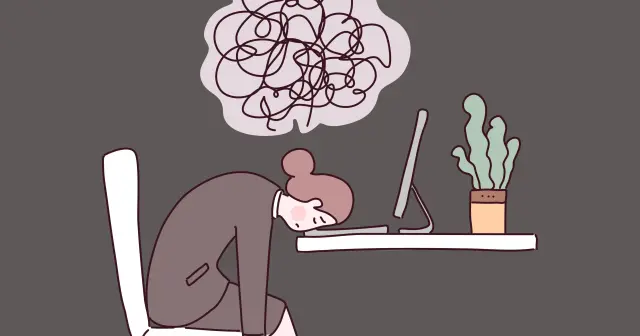

You usually carry out tasks and commitments, or what are called obligations. But if you feel bound to perform them, with no real desire to keep going, the reason may be that those duties and tasks are unimportant, or perhaps that they are built on courtesy alone. This matters for your self-esteem.
The social system has advantages in your life, but it also has drawbacks, especially when it consumes your time and effort in obligations that involve carrying other people's worries and being occupied with their circumstances.
This can make you forget yourself, neglect your family or marital relationship, or abandon thinking about an important project you want to complete and manage. There is a conflict between your interests and the long time you spend thinking about people's circumstances. When you do not give yourself enough time, you become unprepared to think about the important steps. From here your inner conflict begins: your mind urges you to start an important project and study its steps, while you are busy with side matters.
For a deeper understanding of how thinking shapes your choices and priorities, you can read the article The Psychology of Decision-Making.
Some of the values you hold on to may not suit you. They harm you without your noticing, and they may keep you from focusing on the habits that help you manage money, connect with new people and learn how to run a project.
Losing time and opportunities makes you feel pain or sorrow toward yourself, along with a loss of motivation and of self-esteem.
I reflected on the case of Omar, who wanted to start a business and did in fact establish it. But his friends reproached him for his absence. He began to feel guilty toward them and decided to spend every afternoon and evening visiting them, and he stopped following up on running his business. After a few months his revenue began to fall. The inner conflict and negative habits took hold of him. He became skilled at escaping from facing problems, and the result was that he lost his business, became a debtor, and gave in to circumstances and negative habits, sitting in his friends' gatherings without doing anything. You could say that Omar lost an important part of his self when he lost his project.
When Omar let go of his focus and tasks, a sense of weakness and defeat began to seep into the voice inside his mind. Pay attention to what you tell yourself: if you ignore the voice of the self and begin listening to the voices of people in your mind, your confidence in yourself is shaken.
The second way your self-esteem comes under attack is through thinking in terms of values you inherited from your surroundings and never reviewed, which makes you take steps that harm you, as happened in Omar's story. Among these values are those that cast doubt on the importance of taking initiative and on accepting error and correctness. Yet these concepts are not fixed principles or correct ideas. They are inherited notions, and inherited traditions are not necessarily reliable to depend on.
Such concepts include those that load you with side responsibilities and social obligations, along with people's pressure and your guilt if you do not do what is asked of you. Here you need to stop for the sake of yourself, speak frankly with yourself, and choose your decisions. Do not accept surrender, do not be complacent, and do not let frustration seep in until you start believing people's opinions of you and doing whatever they ask.