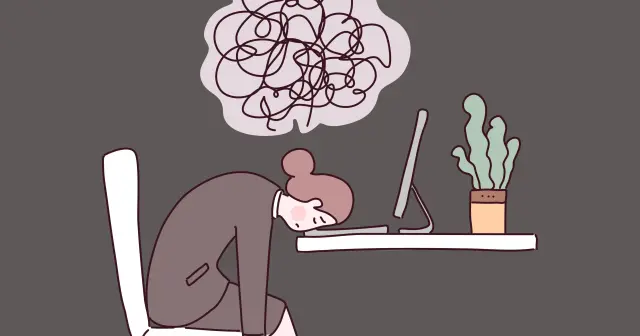

Thinking is inseparable from intelligence and creativity; these are overlapping abilities, so one may be explained in terms of the other. Thinking is familiar to people and many practice it, yet it is one of the concepts most resistant to definition. Thinking includes both the critical and the creative sides of the brain, that is, both logic and the generation of ideas.
In its general sense, thinking is (the search for meaning, whether that meaning already exists and we try to find and uncover it, or we draw meaning out of things in which it is not apparent, and it is we who extract it or reshape it from scattered existing elements).
Dewey defined thinking as (the process in which facts are presented so as to represent other facts, in a way that infers a belief from beliefs that precede it). In other words, thinking is the mental function by which an individual makes meaning, drawing it out of experience. If we wished to give an operational definition of thinking, we could say that it (includes many elements and serves a number of purposes, and contains multiple tasks such as problem-solving). Thinking is not all problem-solving; it also includes the ability to distinguish between similar and different pieces of information and data, or between what belongs to a given criterion and what does not. It appears that thinking is a process in which the individual engages in multiple operations, beginning with recalling and remembering information, then operating on that same information and procedures,
and on to the process of evaluation, which is decision-making. Based on the definitions mentioned, a definition can be formulated: (thinking is a mental process in which sensory perception interacts with experience and intelligence to achieve a particular goal, with motivation and in the absence of obstacles). Sensory perception consists of sensing reality and paying attention to it; experience is what a person has acquired of information about reality, of living through it, and of the tools and methods of thinking; and intelligence is the basic mental
abilities that people possess in varying degrees. Thinking needs a motive that drives it, and the obstacles that block it must be removed, while avoiding its errors with a mindset prepared and ready to do it.
Learning the skill of thinking is certainly possible and real, despite the doubts raised about it. Thinking is a natural process that any person carries out, but people carry out many processes and still need to learn and develop them. In light of the last definition of thinking, thinking skills can be summarized as follows:
- 1- Psychological and educational preparation skills
- 2- Skills related to sensory perception, information and experience
- 3- Skills related to removing obstacles and avoiding thinking errors
Psychological preparation consists of the following:
Arousing desire and self-confidence, and confidence in one's ability to think and reach results; determination and resolve; flexibility and open-mindedness; a love of change; and intellectual harmony.
The skills related to sensory perception can be summarized as directing the senses according to the goal and one's scientific background, attentive listening, careful observation and linking this with experience, and widening the scope of perception by looking in several directions and from several angles, and storing and recalling information. The skills related to reality and information are rearranging the available information, collecting information, and representing information appropriately in a table, diagram or graph, and exploring patterns and relationships among pieces of information, such as order, sequence, cause and effect, and so on. And finally, discovering meanings, such as summarizing and representing, and so on.
Types of thinking:
Types of thinking are identified as seven:
- 1- Scientific thinking: the kind of organized thinking that an individual can use in daily life, in the activity they undertake, or in their relationship with the world around them.
- 2- Logical thinking: the thinking practiced when trying to explain the reasons and causes that lie behind things and to know the results of actions. But it is more than just identifying causes or results; it means obtaining evidence that supports or proves a point of view, or refutes it.
- 3- Critical thinking: thinking based on exactness in observing the facts related to topics, discussing and evaluating them, adhering to the correct framework of relationships to which these facts belong, and drawing conclusions in a logical and sound way, while observing scientific objectivity and staying away from subjective factors such as the influence of emotions, preconceived ideas or conventional opinions.
- 4- Creative thinking: to make something familiar out of something unfamiliar, and to turn the familiar into something unfamiliar.
- 5- Reconciliatory thinking: thinking whose owner is characterized by flexibility, non-rigidity and the ability to take in the ways in which others think. They show acceptance of others' ideas and adjust their own ideas to find a middle path that combines their way of handling a matter with others' approach to it.
- 6- Superstitious thinking: the aim of reviewing this pattern of thinking is to understand it so as to immunize students against using it and to reduce the occasions and circumstances in which it occurs.
- 7- Authoritarian thinking: the aim of presenting it is to understand it so as to immunize students against using it, because if this type of thinking spreads, it kills spontaneity, criticism and creativity.
The teacher's response style and its effect on students' behavior
Teacher responses can be classified, according to their effect on students, into:
1- Responses that end or cancel any opportunity for thinking and developing its skills, which are:
– Criticism
– Praise
– Anything that belittles students, such as non-verbal responses shown in facial expressions or tones of voice that suggest sarcasm
2- Responses that open the way for thinking and encourage it, which are:
– Silence (a period of waiting)
– Neutral acceptance
– Positive acceptance
– Acceptance and empathy
– Asking the student to clarify both the concept and the process
– Facilitating the gathering of material or the obtaining of data