
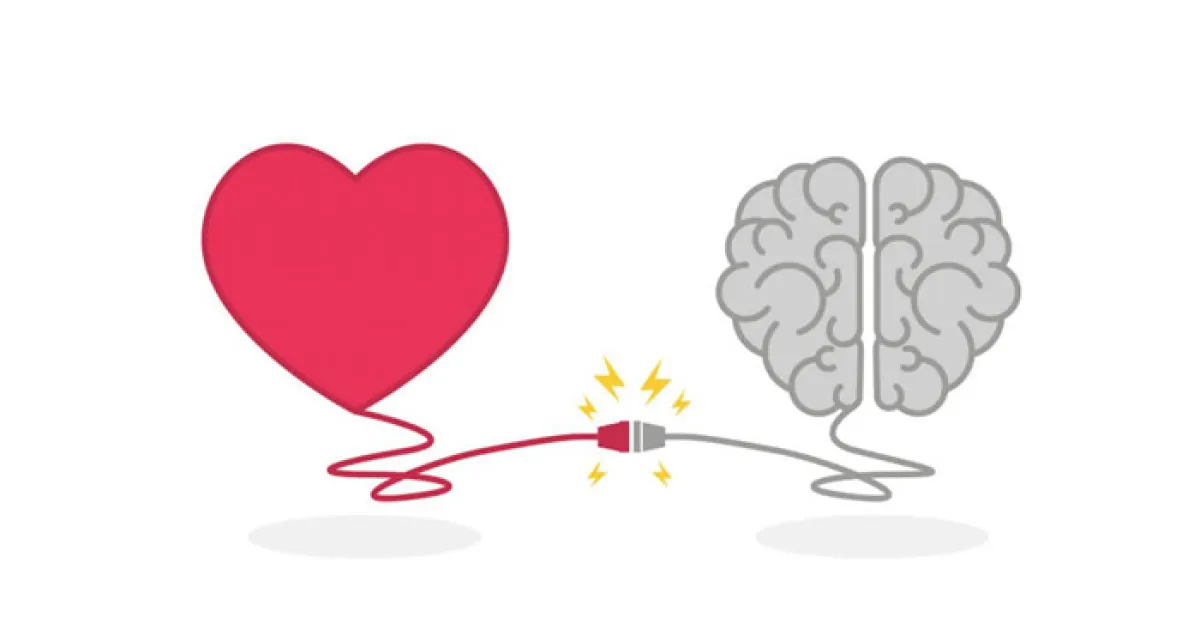
Emotional intelligence is considered a modern concept, with clear and important effects on every person's life, on the way they think, and on their relationships and emotional responses. The cooperation between mind and heart, or between feeling and thought, highlights the importance of emotion in thinking, whether through making wise decisions or through giving us the chance to think with calm and clarity, if we take into account that when emotion grows too strong it spoils our ability to think soundly and reach sound decisions.
The subject of emotional intelligence is relatively new in the field of education. It began in the United States about 20 years ago. Here we present an introduction to emotional intelligence and its importance, and its relationship to how the brain works and to the learning process. We also look at how to teach emotional intelligence, whether as an independent curriculum or by integrating it into the curriculum. We also present the beginning of an action research study on emotional intelligence, whose first stage starts with changing patterns of behavior in the learner.
Emotional intelligence can be defined as the ability to manage our emotions and put them to use in order to maximize our personal capacity and effectiveness in making the appropriate decision in response to those emotions. It includes managing emotions and generating the appropriate emotions when they are needed, as well as changing learned patterns of behavior.
Types of intelligence:
Linguistic intelligence: the ability to use language and the meanings of words, to speak well, and to convey concepts clearly
- Logical intelligence: mathematical ability, abstract thinking and problem-solving
Personal intelligence: the ability to know the strengths and weaknesses in one's own personality, to be aware of one's emotional states, and to manage one's emotions and motivate oneself
- Social intelligence: keen observation and knowing the differences between people, especially their temperaments and moods, and knowing their desires and motives
- Rhythmic intelligence: the ability to distinguish sounds and rhythms
- Spatial intelligence: breadth of perception of the world, the ability to visualize, to know directions and to estimate distances
- Bodily intelligence: the ability to control the movements of the body
- Environmental (naturalist) intelligence: the ability to understand nature and the animals and plants in it, and to classify them.