Your ability to change and grow certainly begins with using your mental capacities. All concepts and traits arise in your mind, and your mind has shaped the specifications of your personality. If you want to change your life, you must reshape your traits and habits.
The flexibility to bring about change gives you ways to form new habits. It also helps you adjust your behavior and acquire skills that match what you need to pursue your goals in life. With every experience or challenge you face, your mind works to create new neural connections or strengthen existing ones. This increases your capacity to learn, adapt and keep growing in how your personality performs.
What Is Neuroplasticity?
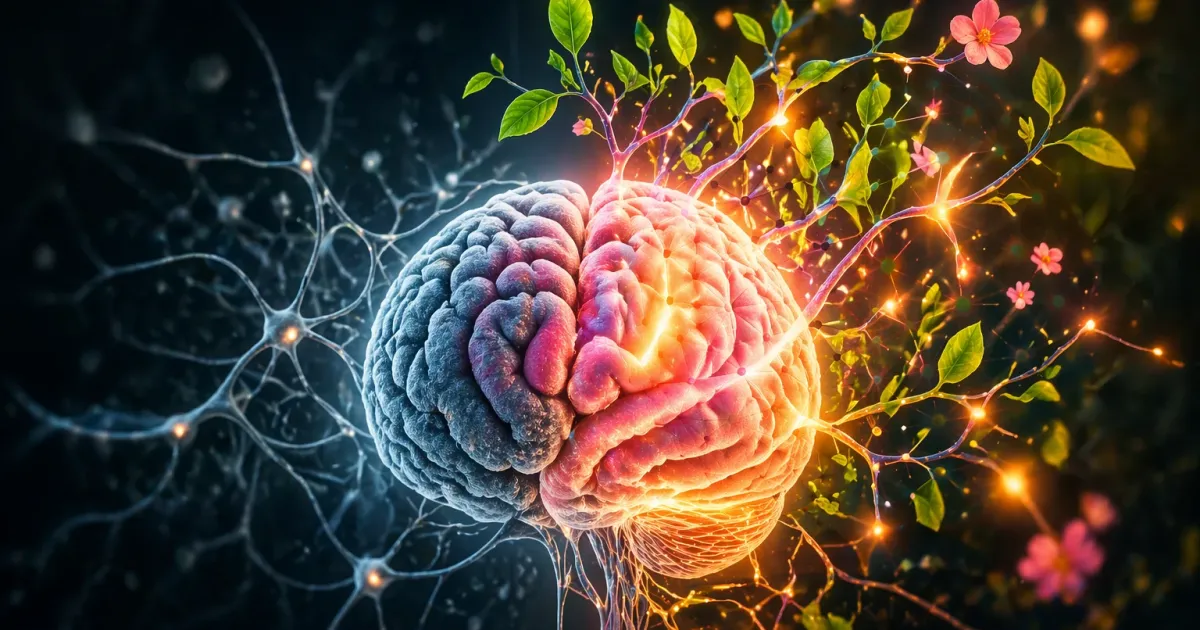
Neuroplasticity is your ability to modify the information maps in your brain. It also helps you improve the functions that review your daily experiences. When you begin a new activity or repeat a particular behavior, your brain forms new neural connections. Over time, these connections become fixed pathways that make up a habit or an acquired skill.
Plasticity helps you build healthy or social habits, such as practicing social communication or learning quickly. It also explains why it is hard to get rid of negative habits such as smoking, excessive use of smart devices, mental distraction and procrastination.
Neuroplasticity and Habit Formation
Habits do not form suddenly. They grow gradually with repetition and form neural connections. When you commit to a positive behavior, such as sleeping early or exercising, your brain builds new neural networks. With continued practice, these networks become stable for your behavior. The behavior then becomes an automatic habit that is easy to keep up without much effort.
But neuroplasticity has another side. It can also entrench negative habits if you keep repeating them. This explains why it is hard to get rid of some harmful behaviors such as smoking or excessive use of smart devices.
Acquiring New Skills and Methods
You can practice flexibility, or train yourself to accept change and learn new skills, at any age, whether you are learning a foreign language, playing a musical instrument, or even driving a car. Every skill requires you to create new neural pathways in your brain.
At first you may find it difficult. But with continued training and practice, you succeed in creating new pathways. Afterward, the information turns into skilled behavior, and then the behavior becomes automatic. This is where the secret of neuroplasticity lies: turning the conscious effort of learning into acquired performance.
Your Mind Never Stops Learning
Contrary to the common belief that the brain stops developing after childhood, studies show that neuroplasticity can continue throughout life. This means you can always learn, develop and recover at any stage of your life.
This fact offers hope to those who have had a stroke or brain injuries, since through rehabilitation programs the brain can train itself to redistribute functions among different areas to compensate for what was lost.
How Can You Benefit from Neuroplasticity in Your Life?
Neuroplasticity gives you the ability to grow and develop at any stage of your life. Repeat positive behaviors regularly until they become part of your daily habits. Stimulate your mind by learning new skills or solving puzzles.
Begin by paying attention to your openness to change and to practicing positive behaviors. Learn to observe calmly and with awareness. Practice discipline and conscious attention to your actions. Make your choices precisely, and act in ways that allow for change.
Conclusion
Neuroplasticity is the secret of your ability to form new habits. It is also the key to acquiring different skills and continuing mental growth. Every new experience you go through reshapes your mind and gives it stronger, more efficient neural pathways.
So invest in positive practices such as continuous learning, exercise and mental training. In doing so you give yourself a flexible mind able to adapt and meet challenges.
➡️ And if fear of failure is keeping you from change, you can read the article: How to Overcome the Fear of Failure and start achieving your goals