
Introduction: Why I Begin Here
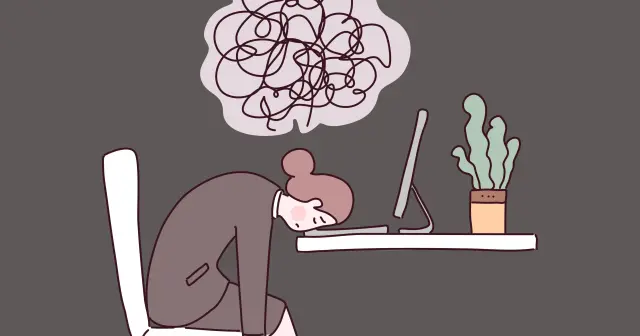
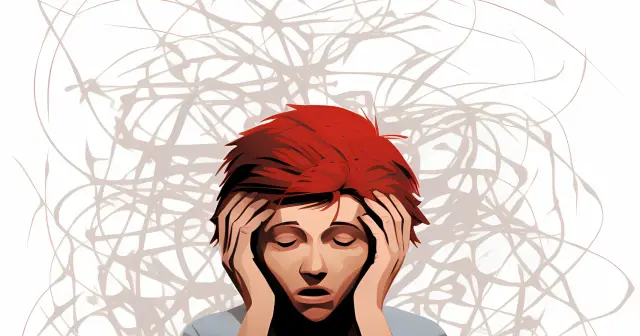
In more than thirty years spent between the counseling chair and the training hall, not one client has described their condition with the bare word "anxiety". One described it as "a weight on my chest that never leaves me". Another, as "an inner voice that replays catastrophic scenarios before I sleep". A third, as "two hands that won't stop trembling before any meeting". This variety of description is no coincidence. Anxiety is not a single feeling. It is a multidimensional response in which the body, thought and behavior all take part at once.
I am writing this article, the first in a three-part series I place in your hands, because I have noticed over years of clinical practice that most people who suffer from anxiety do not lack awareness that it exists. Their problem lies in misunderstanding its nature. They treat it as an enemy to be eradicated, when at its root it is a biological alarm system as old as humanity itself, designed to protect us, not to torment us. The paradox is that the first step on the road to self-healing is not "fighting" anxiety but understanding it precisely: What is it? Where does it come from? And what does it do to your health, your personality and your relationships when it stays too long? That is exactly what this article will answer.
How I Describe Anxiety from the Clinic
Anxiety as a Three-Dimensional Response
When I explain anxiety to my clients, I always use a simple three-part model that I rely on in the first clinical assessment:- The physical dimension (racing pulse, shortness of breath, muscle tension, stomach upset)
- The cognitive dimension (catastrophizing thoughts, disastrous expectations, mental rumination)
- The behavioral dimension (avoidance, hypervigilance, compulsive reassurance-seeking).
From My Clinic: When the Alarm Bell Becomes a Constant Sound
I clearly remember a woman of forty, a successful executive, who came to me complaining that she "no longer felt safe anywhere", although no real danger surrounded her. The problem was that her internal alarm system, the amygdala, had learned over years of accumulated pressure to stay in a state of constant alert, so it rang its bell even in the absence of any actual threat. This is exactly the difference I always explain:- Normal anxiety is a temporary alarm that disappears when its cause does and motivates us to perform
- while disabling anxiety is an alarm stuck in the permanent "on" position, draining psychological and physical energy without protecting against anything real.
The Causes of Anxiety as I See Them in Practice
Anxiety has no single cause. It is an overlapping network of factors that I classify clinically into three layers:1) The Biological and Neural Layer
The amygdala is the brain's early-warning center. When neural arousal is repeated over long periods without proper release, the secretion of cortisol and adrenaline rises chronically, and the body moves into a state of permanent alert known as allostatic load, which is consistent with research on chronic stress and its long-term effects on the nervous and immune systems [2].2) The Cognitive Layer
One of the most common patterns I meet in the clinic is what I call "catastrophic exaggeration", where the mind jumps straight from a simple possibility to the worst possible scenario. This pattern is not a personal flaw. It is a learned mental habit that can be reprogrammed with the right training, which we will detail in the second article of this series.3) The Environmental and Relational Layer
A pressured work environment, insecure relationships, early childhood experiences, and even the pattern of communication within the family are all factors that feed anxiety or ease it. What I have noticed repeatedly is that people who lack a real social support network are more likely to see passing anxiety turn into a chronic condition. I recall a young man in his early thirties who had worked for many years in a highly competitive management environment and described himself as "used to pressure". But when we began drawing his life timeline together, it became clear that his anxiety had not begun at work. It was rooted in childhood, in a home where he did not feel enough emotional safety, so he learned early to stay alert for any sign of criticism or rejection. When he moved into a stressful work environment, it did not "create" the anxiety. It reactivated an old, deeply rooted pattern. This is why I always stress that effective treatment of anxiety needs to look at the environmental and relational root, not only at the visible symptom.What Actually Happens When You Worry?
The Effect of Anxiety on Your Physical Health
One of the most dangerous things many of my clients overlook is that anxiety is not "just a feeling". It is an actual physiological state. Scientific reviews indicate that chronic anxiety disorders are associated with an increased risk of physical illness, from cardiovascular disorders to digestive and immune problems [3]. A study published in this field documents that chronic anxiety is associated with higher rates of physical illness over the long term because of continuous physiological depletion [4]. A review from Harvard University also confirms that the relationship between anxiety and physical illness is reciprocal: anxiety worsens physical symptoms, and physical illness in turn feeds anxiety, creating a vicious circle that is hard to break without conscious intervention [5]. Among the most notable findings of long-term research is that persistent chronic anxiety is associated with an increased risk of cardiovascular disease and premature death, as shown by the German Gutenberg Health Study, which followed thousands of participants over several years [6].The Effect of Anxiety on Your Personality
When anxiety continues untreated, it does not remain a "symptom". It seeps into identity itself. I notice in the clinic that a client who has lived for years with untreated anxiety gradually begins to redefine themselves through their anxiety: "I am an anxious person by nature", instead of "I am going through a state of anxiety that can be overcome". This small linguistic shift in the way one speaks about oneself is one of the most serious effects of long-term anxiety on personality, because it turns a temporary state into a permanent identity. I saw this very clearly in personality assessment sessions. A client who arrives with chronic anxiety may start describing themselves with fixed traits such as "indecisive" or "weak-willed", while the truth is that these are not fixed traits of their personality but temporary symptoms of an untreated nervous condition. The real danger is that this confusion between "symptoms" and "identity" makes healing harder, because the person feels they are being asked to change "who they are" rather than treat a condition passing through them. This careful distinction, between identity and a temporary state, is the first thing I work on with any client who describes themselves as "anxious by nature".The Effect of Anxiety on Your Communication with People
Social anxiety in particular reshapes communication style entirely. Studies show that people with high social anxiety tend to adopt a "self-protective" communication style that reduces personal disclosure and increases reserve, which weakens the quality of relationships over the long term [7]. Recent research also shows that social anxiety directly affects face-to-face communication skills, from eye contact to the ability to start a conversation [8]. What I see in couples and family therapy sessions is that the anxious partner is often misunderstood as "cold" or "uninterested", when in truth it is their anxiety that prevents them from expressing their feelings naturally.The Effect of Anxiety on Your Relationships
A study that tracked couples' daily interactions shows that anxiety disorders are associated with a notable drop in everyday relationship quality and an increase in mutual tension between partners [9], and other studies confirm that having an anxiety disorder in one partner is statistically associated with lower overall relationship satisfaction for both partners together [10]. This is what I always explain to the couples who come to me: anxiety is not an individual problem that concerns only one person in the relationship. It is a heavy guest sitting at the table of the whole relationship.What It Means to Keep Worrying
The question I always ask the person in front of me is: "How long have you been carrying this anxiety?" Because the answer reveals the essential difference between passing anxiety that moves through like a wave and chronic anxiety that has settled in the body and mind. When anxiety goes on for a long time, the body enters the state of "allostatic load" I mentioned earlier. The vital systems work continuously in emergency mode, and the body's psychological and physiological reserves are gradually depleted [2], until a person becomes, as one of my clients once described it to me, "tired inside even though I haven't done anything". But the news I always make sure to convey clearly is this: the persistence of anxiety is not a final verdict. The amygdala that learned fear can learn calm again. The human brain has the property of neuroplasticity, which makes change possible at any age and at any stage. And this is exactly what the second article of this series will address: how to begin facing anxiety yourself, and how to build a firm belief in your capacity for self-healing.How I Distinguish Normal Anxiety from Anxiety That Calls for Specialized Treatment
One of the questions that comes up from every client who visits me for the first time is: "Is what I feel normal, or has it become a disorder that needs treatment?" The precise clinical answer depends, in my assessment, on four criteria I always use in the first session: intensity, duration, frequency and functional impact. Normal anxiety arises in response to a specific, realistic situation, its intensity matches the size of the actual threat, and it gradually eases when the situation ends or the person adapts to it, like the natural tension before an important job interview or the passing worry before a decisive exam. Anxiety that calls for specialized intervention, by contrast, is anxiety that continues for weeks or months with no clear renewed cause, or whose intensity clearly exceeds the size of the actual situation, or that recurs across multiple unrelated situations, or, most importantly in my assessment, begins to affect the person's ability to carry out daily functions: their work, relationships, sleep and ability to care for themselves. The American Psychological Association confirms that the essential difference between ordinary anxiety and an anxiety disorder lies in the persistence and severity of symptoms and their effect on daily life, not in the mere presence of anxious feelings [1]. In my clinic, I explain this difference to my clients through a simple benchmark I call the "two-week benchmark": if anxiety continues at a noticeable intensity for more than two consecutive weeks with a clear effect on sleep, concentration or relationships, it is time to seek a specialized assessment rather than keep relying on "patience" alone. Among the signs I advise taking seriously without delay:- Sudden panic attacks involving severe heart palpitations, shortness of breath or a feeling of losing control.
- Anxious thoughts that recur against the person's will and consume long hours of their day without stopping.
- Increasing avoidance of situations, places or people they previously dealt with normally.
- Accompanying physical disturbances such as persistent insomnia or digestive problems with no clear medical cause.
- Thoughts of hopelessness or a wish to withdraw entirely from social or professional life.
References and Sources
- American Psychological Association (APA). "Anxiety." — https://www.apa.org/topics/anxiety
- Mayo Clinic. "Chronic stress puts your health at risk." — https://www.mayoclinic.org/healthy-lifestyle/stress-management/in-depth/stress/art-20046037
- Bowen, R.C., Senthilselvan, A., Barale, A. (2000). "Physical Illness as an Outcome of Chronic Anxiety Disorders." Canadian Journal of Psychiatry. — https://journals.sagepub.com/doi/10.1177/070674370004500506
- "Impact of Anxiety and Depression on Physical Health." PMC5440426. — https://pmc.ncbi.nlm.nih.gov/articles/PMC5440426/
- Harvard Health Publishing. "Anxiety and physical illness." — https://www.health.harvard.edu/healthy-aging-and-longevity/anxiety_and_physical_illness
- "Social anxiety and self-protective communication style in ..." PubMed. — https://pubmed.ncbi.nlm.nih.gov/19828138/
- "Impact of social anxiety on communication skills in face-to-face interactions." ScienceDirect. — https://www.sciencedirect.com/science/article/pii/S2451958824000915
- "Anxiety Disorders and Intimate Relationships: A Study of Daily Processes." PMC5177451. — https://pmc.ncbi.nlm.nih.gov/articles/PMC5177451/
- "Anxiety disorders in intimate partners and the quality of their relationship." PubMed. — https://pubmed.ncbi.nlm.nih.gov/22381954/
- "The association of chronic anxiousness with cardiovascular disease and mortality in the community: results from the Gutenberg Health Study." Scientific Reports (Nature). — https://www.nature.com/articles/s41598-020-69427-8